
/News4 min read
What We Shipped: March 2026
March Updates: OpenClaw Integration, CLI, Image Retrieval, Tavily x Elastic on Grounding Agents, GTC Highlights & April 7 Live Coding Event.

Tavily is now on OpenClaw
Tavily is now available as a built-in web search option during OpenClaw onboarding.
That means from the moment you set up your agent, you can connect it to accurate, real-time web results without any extra configuration or skill installation.
With Tavily, OpenClaw agents can retrieve high-signal, information-dense results, ground responses in up-to-date context, and search, reason, and respond more reliably. Built for agents, not browsers.
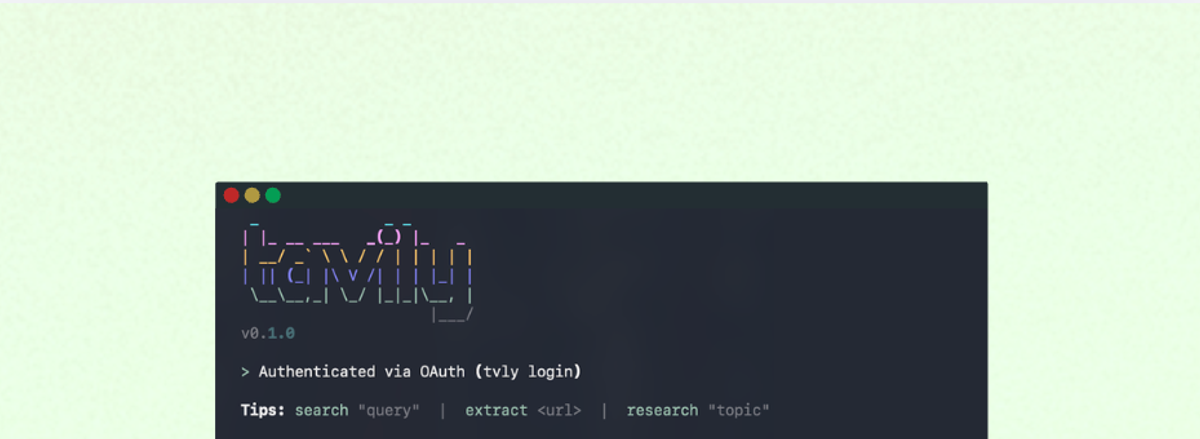
We've brought the full Tavily API to your terminal
The Tavily CLI (tvly) lets you run web searches, extract content from URLs, crawl websites, discover sitemaps, and launch deep research, all from a single tool.
Every command supports --json for machine-readable output, making it straightforward to wire into scripts, pipelines, and AI agent workflows. There's also an interactive REPL mode, just run tvly with no arguments for a chat-like shell experience.
It's particularly useful if you're working with Claude Code, Cursor, or other agent environments. Install the agent skills with a single npx command and your coding agent gets web search, content extraction, site crawling, URL discovery, and deep research. All powered by the CLI.
Install it via pip or the install script and you're up in minutes.

Grounding agents in real-time data with Elastic
If you're building production agentic workflows, one of the hardest problems to solve is the data layer — how do you combine trusted internal knowledge with live web context, without sacrificing accuracy or control?
Rotem (Founder & CEO) sat down with Brian Bergholm from Elastic to tackle exactly that. The on-demand session walks through how to ground agents in reliable internal data using Elastic, enrich responses with live web context via Tavily, and deploy the whole stack with enterprise-grade security and compliance built in. The result is more accurate answers, fresher context, and agent workflows that are actually ready for production.
If you're building or upgrading your agentic AI stack, this one is worth an hour of your time.

Introducing source-linked image retrieval
We've updated Tavily Search so that when include_images is enabled, it now returns source-linked images on each search result — giving agents and applications access to the diagrams, charts, screenshots, and product visuals that actually appear on the page itself. Text and relevant visuals come back in a single response, no parallel image search, no matching layer on top.
The important distinction is that these aren't generic images from around the web. They're visuals found on the same page as the source result, which makes them far more useful for downstream reasoning and UI.
If you're already using Tavily Search, you can turn this on today with a single parameter change.
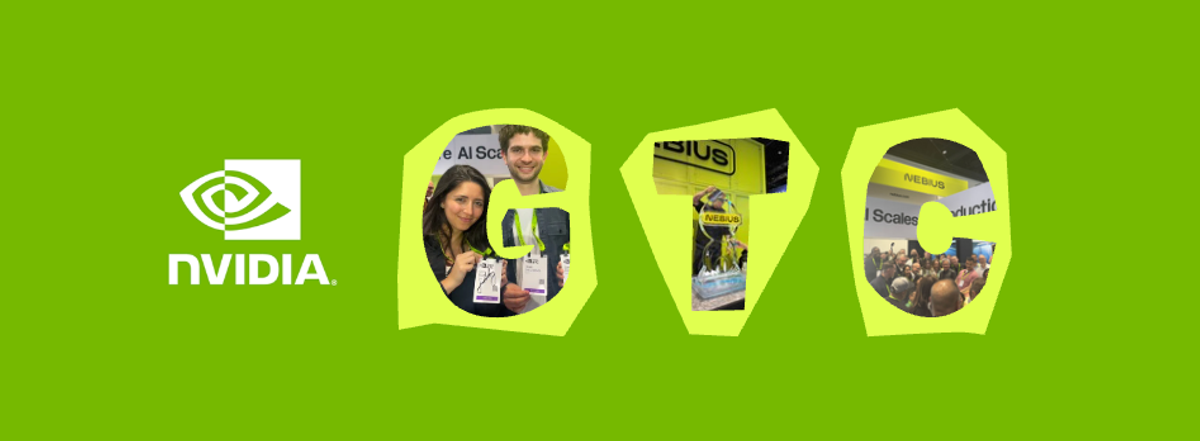
Tavily at Nvidia GTC 2026
Tavily is now integrated into Nvidia's AI-Q Blueprint as the retrieval layer, making real-time web search a native part of the agent stack. Agents run on Nvidia-optimized infrastructure, inference scales via Nebius, and external knowledge is fetched via Tavily in real time.
A highlight of the week was NVIDIA CEO Jensen Huang stopping by the Nebius booth to spotlight the partnership, a sign of how central the combined stack is becoming to the agentic era.
[Start building with NVIDIA AI-Q Blueprint →]

Coming up: live coding webinar on April 7th
We're hosting a webinar on April 7th featuring a live agent coding demo with JetBrains. If you want to see how Tavily fits into a real development workflow end-to-end, this one's worth joining.