
/News5 min read
Tavily and Nebius at Nvidia GTC 2026
At Nvidia GTC 2026, one theme stood out: agents are becoming the default interface for AI systems. But agents are only as useful as the information they can access. With Tavily integrated into Nvidia’s AI-Q Blueprint, real-time web search is now a native part of the agent stack, enabling systems that can retrieve, reason, and act on up-to-date information.

The Community at GTC

Rotem sat down with Markiesha Patrice of the Nebius for Startups Podcast to share the story behind building agent-native search, from starting in college to scaling into enterprise and joining Nebius.
In this episode, he breaks down what’s changing in search in an AI-native world, how to build infrastructure for agents, and what it really takes to land enterprise customers early.
If you’re building in AI (or thinking about it) this is a conversation worth listening to. See it soon at https://pod.co/the-nebius-for-startups-podcast
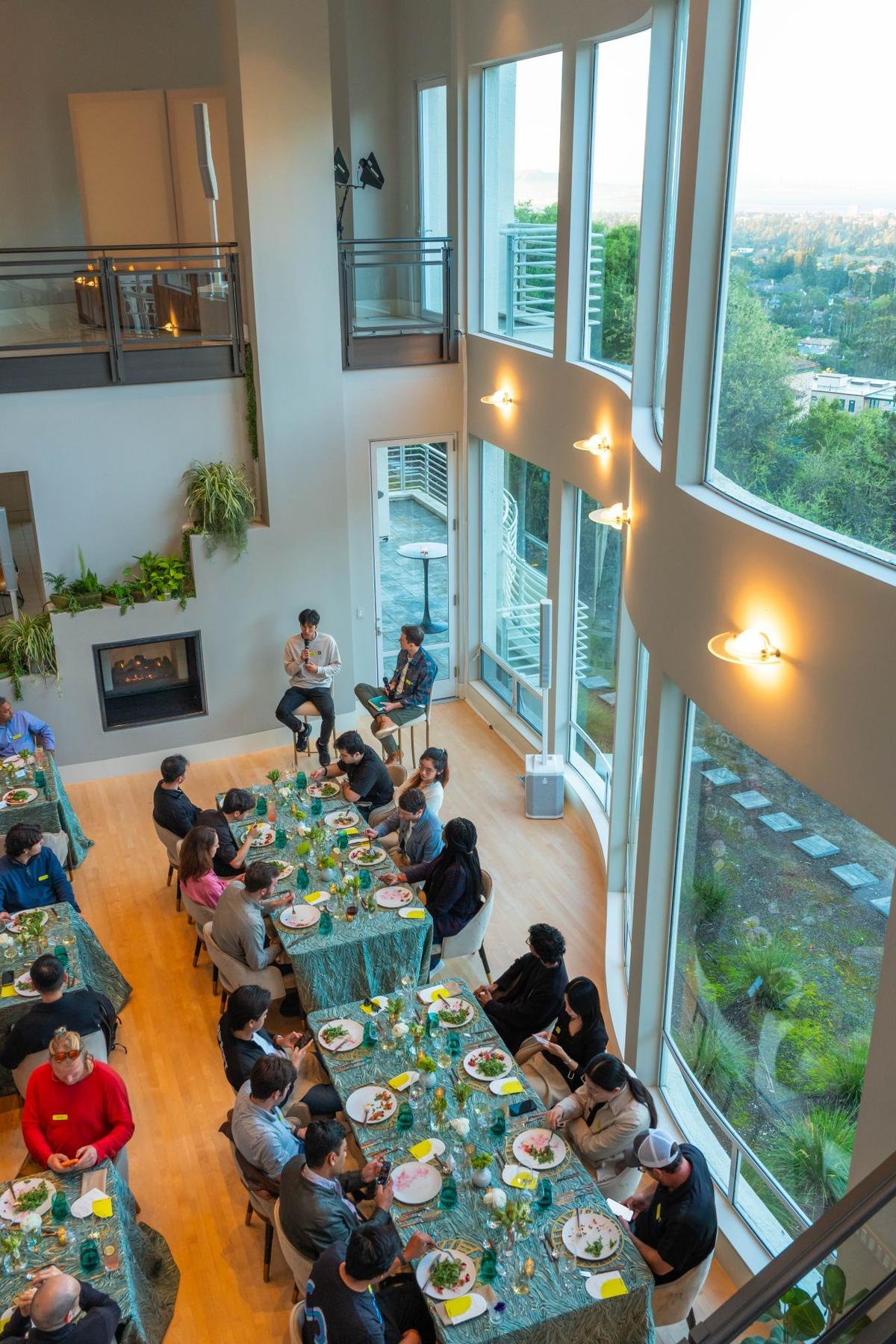
Check out that view!
Together with Nebius we co-hosted the Agentic AI Dinner with guests from companies across Robotics & Physical AI, Frontier Media, and Agentic AI for an evening designed to cut through the noise of conference week.
A shared space with high-signal conversations and a room full of builders shaping what’s next. What more could you ask?
At events like GTC event burnout is real. Our goal was simple: create something that felt worth your time the moment you walked in.
Grateful to everyone who joined us, and to our partners at Nebius for making it happen.
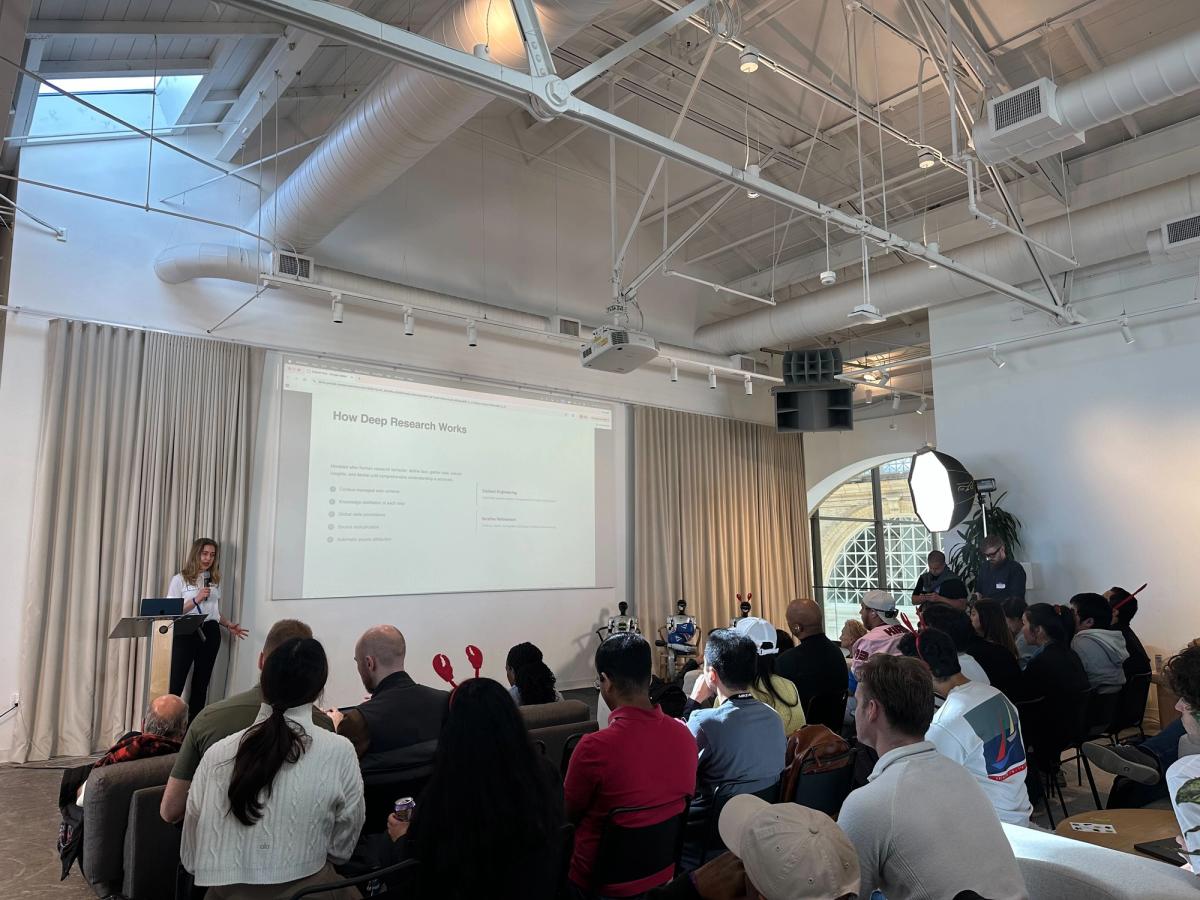
What a way to kick off GTC.
At Nebius Build SF, we brought together hundreds of builders from solo hackers to startups to engineers at leading companies for a full day of building across inference, agentic search, and robotics.
Projects spanned everything from inference optimization and runtimes to physical AI, policy learning, and evaluation, plus hands-on workshops in robotics and large-scale inference.
Incredible energy, ambitious ideas, and a glimpse of what’s coming next.
Huge congrats to the winners: Injester, Robostore, Asha, Jimmy, Chase, and Topology, and to everyone who showed up to build!
The Show
Nvidia GTC 2026 made one direction clear: the industry is converging on agentic AI systems as the dominant paradigm for how software is built and operated.
Across announcements, a consistent pattern emerged:
- New hardware optimized for agent workloads (Vera CPU)
- Tooling for autonomous agent deployment (NemoClaw / OpenClaw)
- Infrastructure for large-scale inference and orchestration (Dynamo, AI factories)
But one layer is often underemphasized in these discussions: access to live, external knowledge. Agents are only as useful as the information they can retrieve.
At GTC 2026, Tavily became part of that foundational layer.
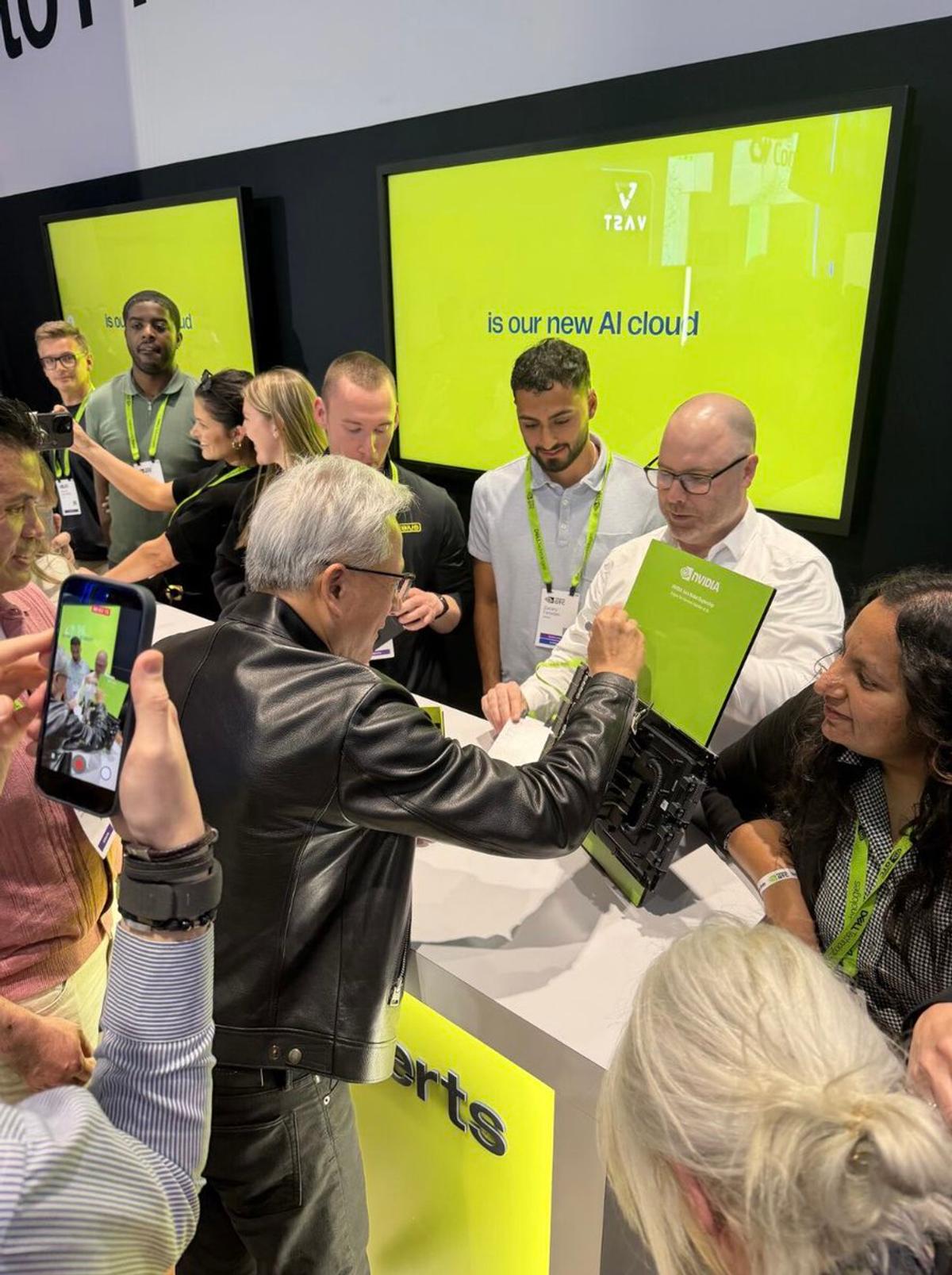
A big moment at GTC.
NVIDIA CEO Jensen Huang stopped by the Nebius booth to highlight the growing partnership powering the next generation of AI infrastructure.
As Nebius builds an AI-native cloud on NVIDIA’s latest accelerated computing, companies like Tavily are helping complete the stack, bringing real-time search and live web intelligence into agent workflows.
Together, it’s a glimpse of what the agentic era actually looks like: full-stack, real-time, and built for production.
Nebius + Tavily: Building the Agentic Cloud Stack
Another major announcement at GTC was Nvidia’s deepening partnership with Nebius, including a $2B investment to scale AI infrastructure.
Within that context, the acquisition of Tavily into Nebius’s Token Factory is strategically important.
What the combined stack looks like
- Nvidia: compute (Rubin, Vera CPU, BlueField)
- Nebius: hyperscale AI cloud and inference infrastructure
- Tavily: real-time web search and knowledge retrieval
This creates a vertically integrated stack where:
- Agents run on Nvidia-optimized infrastructure
- Inference is managed and scaled via Nebius
- External knowledge is fetched via Tavily in real time
The result is faster and more capable agents.
Why This Matters for Developers
For teams building AI systems, this changes how architecture decisions are made.
1. Search is no longer optional
If your system depends on:
- Up-to-date information
- External knowledge sources
- Dynamic environments
Then real-time retrieval is not an enhancement. It is a requirement.
2. RAG is becoming infrastructure, not pattern
Previously, RAG was something teams implemented manually.
With AI-Q and Tavily integration:
- Retrieval is built into reference architectures
- Search is standardized across systems
- Developers can focus on higher-level logic
3. Agents need tool-native interfaces
As seen with the rise of tools like OpenClaw and terminal-based agents, systems are moving toward:
- Tool execution
- Multi-step workflows
- Autonomous decision-making
Search must fit into that model.
Tavily’s design, including its CLI and API, aligns with this shift by making retrieval:
- Callable
- composable
- inspectable
Example: Agent Workflow with Tavily in AI-Q
A typical flow enabled by this stack:
- User asks a question requiring current information
- Agent identifies need for external data
- Tavily retrieves relevant web results in real time
- Agent synthesizes findings into a response
- Output is grounded, current, and verifiable
This pattern applies across:
- Enterprise copilots
- Research agents
- Industry-specific AI systems (healthcare, finance, etc.)
Beyond GTC: Where This Is Going
GTC 2026 signals a broader shift in the industry.
We are moving toward systems where:
- Models reason
- Infrastructure scales
- Agents orchestrate
- Search connects everything to the real world
Without retrieval, agents are closed systems.
With real-time search, they become open, adaptive, and continuously informed.
Featured Snippet Target
What role does Tavily play in Nvidia’s AI ecosystem?Tavily provides real-time web search within Nvidia’s AI-Q Blueprint, enabling AI agents and RAG systems to retrieve up-to-date external information during inference.
FAQ
What is Nvidia’s AI-Q Blueprint?A reference architecture for building production-grade AI systems, including agents, retrieval, and inference infrastructure.
How does Tavily integrate into AI-Q?Tavily’s Search API is embedded as the retrieval layer, allowing applications to fetch live web data during execution.
Why is real-time search important for agents?Agents often operate in dynamic environments where static training data is insufficient. Real-time search enables accurate, current responses.
What is the Nebius + Tavily relationship?Tavily is integrated into Nebius’s Token Factory, combining real-time search with Nvidia-optimized inference infrastructure.
Closing Perspective
GTC 2026 was not just about faster chips or larger models. It was about defining the architecture of AI systems for the next decade.
In that architecture, agents are central.
And agents require a continuous connection to external knowledge.
Tavily’s presence at GTC reflects that reality. Search is no longer a peripheral capability. It is becoming a core layer in the agent stack, alongside compute, models, and orchestration.
The systems that win will not just generate answers. They will retrieve, reason, and adapt in real time.